Articles —
Building a Work Wardrobe That Holds Up in Tokyo
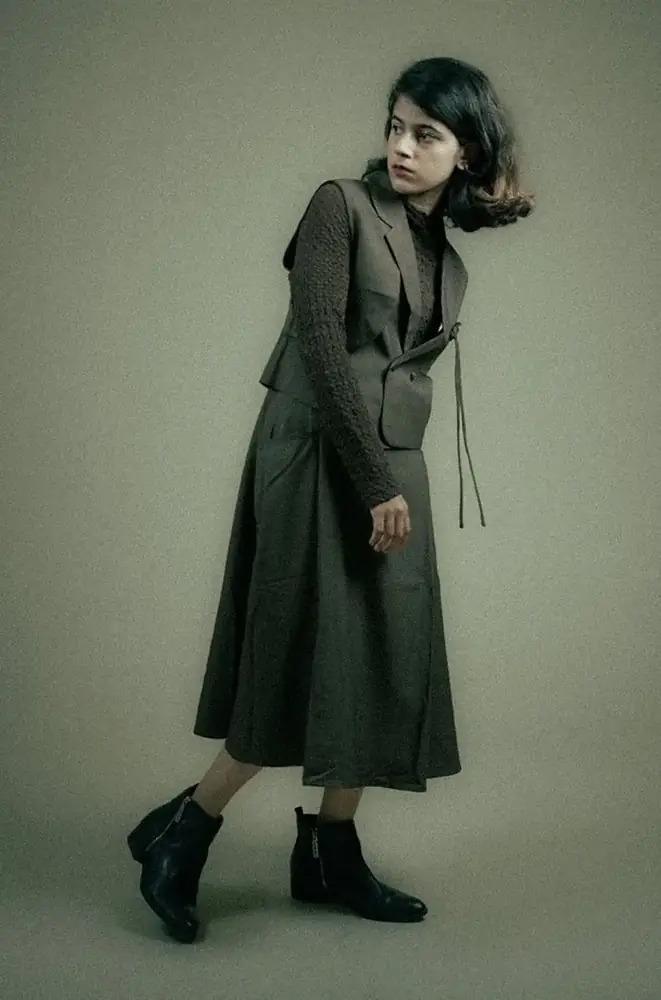
Office dress codes in Tokyo vary more than you think. Here is how to navigate them.
Tokyo office culture is not monolithic. The dress code at a design studio in Daikanyama and the dress code at a trading company in Nihonbashi are almost entirely different, and the advice that works for one will look wrong in the other. This guide is about building a work wardrobe that is specific to your actual workplace, not a generic professional template.
Understanding your office's actual register
Before buying anything, it is worth spending a week paying attention to what the people around you are wearing, specifically the people whose professional standing you respect. Office dress codes are communicated more through observation than through any written policy, and the gap between what is technically allowed and what is actually worn can be significant.
In more formal environments, the safest baseline is a tailored trouser or skirt in a neutral tone, a blouse or fine-knit top, and a structured jacket or blazer. In creative environments, the range is wider, but the principle of intentionality still applies: whatever you wear should look like a choice, not an accident.
The seasonal transition problem
Autumn in Tokyo is particularly difficult for work dressing because the temperature inside and outside can differ by ten degrees or more. Air conditioning in Japanese offices runs cold well into October, which means you need layers that work in both environments without looking like you are dressed for two different occasions.
The most practical solution is a mid-weight layer that reads as a complete garment on its own: a structured cardigan, a light blazer, or a knit jacket. These can be removed without the outfit underneath falling apart, which is the key test for any layering piece in a professional context.
Five pieces that earn their place in a Tokyo work wardrobe
A wide-leg trouser in camel or deep navy. A midi skirt in a textured fabric. A silk or satin-finish blouse in a neutral tone. A structured blazer that works with both. A pair of loafers or slip-on ankle boots that are easy to remove.
These five pieces cover most of the occasions a typical Tokyo work week produces, and they combine with each other in enough ways that the wardrobe does not feel repetitive. The wardrobe audit is a good way to check whether you already own versions of these pieces that you are not using.
A work wardrobe that holds up in Tokyo is less about having a lot of clothes and more about having the right five or six pieces that actually fit your specific office and your specific calendar.
Draft Mica · Work wardrobe · Tokyo fashion · Office style · Women's fashion tips